|
|
|
|
|
|
|
|

The objective of the Association is to promote international cooperation among scientists, engineers and other professionals in the broad field of earthquake engineering through interchange of knowledge, ideas, results of research and practical experience.
|
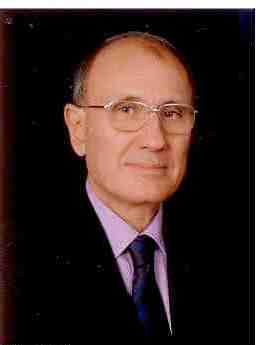
Colleagues, members and friends of IAEE, I have taken over the duty of serving as the IAEE President during the mid-term meeting of the Executive Committee in Toronto, Canada, on July 27, 2010. It is a humbling experience for me to look down the list of names of my predecessors, and other engineers and scientists who have served on the IAEE Executive Committee. Honorary Members of the Association draw the same sense of respect. The Association owes much gratitude to these men and women for the voluntary service they have given and the status they helped it to attain. With barely 50 years behind us we can take pride in the enormous surge of accumulated knowledge earthquake engineering has created and brought forward for making our stated objective a reality: the virtual elimination of the seismic risk through interchange of knowledge, ideas, research results put into implementable form and sharing of practical experience. If we permit a moment of collective hubris to escape us, we can claim that, for the first time in history, we have the knowledge, the technology and even the wealth to design a different world. And yet, earthquakes continue to batter countries and their economies. This year alone, the world has witnessed 8 major earthquakes, two of which have caused far-reaching consequences for Haiti and Chile. While there is perhaps reason to be encouraged by our observations in Chile, the experience in Haiti is truly depressing. It shows that an enormous part of our task still lies unresolved before us. No amount of grandiose speech-making can obscure the stark fact that the earthquake peril remains the most sinister natural disaster for which many countries are still ill-prepared. There is still a lot to do before we can take comfort in the satisfaction that loss of life and limb and the physical built environment have been reduced to “tolerable” levels. Earthquake science is a global science, oblivious to political or physical boundaries. It can therefore only be practiced through effective international cooperation. Through its member national associations, the IAEE is the only global scientific body to disseminate innovative research results for the reduction of seismic risk. Sensible decision-making policies that governments must pursue for that objective will continue to be based on theory, experimentation and experience that we collectively generate. I think that, with an age of maturity upon the Association we should spread our wings for more ambitious objectives. No longer can we take satisfaction with distributing the collection of seismic design codes used around the world or our involvement in the organization of the quadrennial World Conferences and publication of leading edge research results in our official journal, Earthquake Engineering and Structural Dynamics. The time has come for us to be more internationally prominent, seek representation in international learned societies and other active platforms. We should keep in mind that IAEE cannot afford to leave a void for tasks objectives that our founders had envisioned. I am honored to take over as the President of this Association for the next four years. As I perform my duties I will look forward to receiving your help and support as well as your criticism so that we can develop our common vision for the Association. |
|
The International Association for Earthquake Engineering (IAEE) was established in February 1963 with its Central Office in Tokyo.
The IAEE aims to promote international cooperation among scientists and engineers in the field of earthquake engineering through interchange of knowledge, ideas, and results of research and practical experience.
The aim has been achieved mainly by holding the World Conference on Earthquake Engineering (WCEE) every four years. The most recent 14th WCEE was held in Beijing, China in 2008. The 14th WCEE attracted more than 3,100 participants from all over the world. And the 15th WCEE will be held in Lisbon, Portugal, in 2012.
I believe that this web site will increase visibility and recognition of the IAEE within the global engineering and scientific communities as well as within non-technical communities.
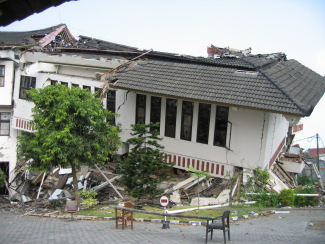 |
the Java, Indonesia Earthquake (M6.3) May 26, 2006 |
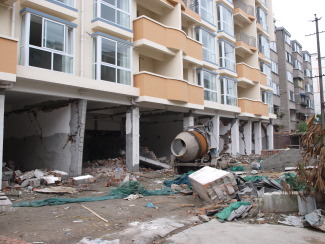
| the Eastern Sichuan, China Earthquake (M7.9) May 12, 2008 |
 |