
Our objective is to promote international cooperation among scientists, engineers and other professionals in the broad field of earthquake engineering through interchange of knowledge, ideas, results of research and practical experience.
Earthquake Engineering & Structural Dynamics
Official Journal of IAEE
Edited by:
Michael Constantinou, Iunio Iervolino, Dimitrios Lignos, and Xinzheng Lu
[see latest] | [see all]
Ready Now!
A worldwide compilation of earthquakes and their magnitudes, losses, and references for information from ancient times to the near present.
https://www.ngdc.noaa.gov/....Up to the minute reports of worldwide earthquakes, with maps, estimates of affected local area, seismological information, and other data. http://earthquake.usgs.gov/
http://earthquake.usgs.gov/Reconnaissance reports from recent earthquakes.
http://www.eeri.org
The 13th U.S. National Conference on Earthquake Engineering (13NCEE) will bring together researchers and practitioners to share new knowledge and technical innovations that help us to understand and mitigate the damaging effects of
earthquakes and tsunamis. The Earthquake Engineering Research Institute (EERI) is organizing this conference in Portland, Oregon—a region with significant hazard from the Cascadia Subduction Zone. The 13NCEE will provide a unique environment and
comprehensive program designed to facilitate synergy between earthquake scientists, engineers, and policy professionals from the United States and around the world.
Visit the registration page at the website for more information on registration rates, categories, and deadlines:
https://13ncee.eeri.org/registration/ . EERI members receive the best rates, so make sure you renew or join for 2026 first before registering.
More information about the conference, including sponsorship and exhibit opportunities, is available at the 13NCEE website: https://13ncee.eeri.org/
Also, be sure to check out a preview of the conference schedule and program by looking at the Schedule at a Glance
and the Accepted Papers Gallery!
- IAEE Central Office
We are deeply saddened to announce the passing of Professor James M. Kelly, Professor Emeritus of Civil and Environmental Engineering at the University of California, Berkeley, on September 23, 2025, at the age of 90. Widely regarded as the Father of Seismic Isolation, Professor Kelly was a defining figure in the development of modern seismic protection technologies. His work transformed earthquake engineering and safeguarded countless structures and lives. In recognition of these extraordinary contributions, he was elected an Honorary Member of IAEE in 2017.
Further tribute: UC Berkeley In Memoriam for James M Kelly
- IAEE Central Office
The proceedings of 18WCEE and the previous conferences are available online.
- IAEE Central Office
We are pleased to announce that the second series of "CSI/IAEE Master Series" during 18WCEE is now archived on our website. The page provides access to the pdf versions of the monographs for "Read the Masters", photos and short videos for "Greet the Masters", and the keynote videos for "Meet the Masters".
https://www.iaee.or.jp/MastersSeries.html
- IAEE Central Office
IAEE announces the adoption of a Code of Conduct. IAEE is committed to providing a safe, respectful, and inclusive environment for all members, staff, and participants at our events and functions. This Code of Conduct outlines our expectations for behaviour to ensure that members of our community feel respected and welcomed.
- IAEE Central Office
The IAEE is pleased to announce that the following individuals have been selected as the IAEE Officers and Directors. The General Assembly (GA) of the IAEE convened at the 18th World Conference on Earthquake Engineering (18WCEE) and voted/selected for those positions. We, the Officers and Directors, will try our best for the sustainable development of the IAEE and wish to ask for your most kind cooperation with us.
Officers:
- Farzad Naeim, President (United States of America)
- G. Michele Calvi, President Elect (Italy)
- Ken Elwood, Executive Vice President (New Zealand)
- Carlos Ventura, Vice President (Canada)
- Hiroe Miyake, Secretary General (Japan)
Directors:
(Second term Directors)
- Sinan Akkar (Turkey)
- Sergio Alcocer (Mexico)
- Ioannis Anastasopoulos (Switzerland)
- Stavroula Pantazopoulou (Canada)
- Durgesh Rai (India)
- Tao Wang (China)
(First term Directors)
- Ana Beatriz Acevedo (Colombia)
- Alondra Chamorro (Chile)
- Koichi Kusunoki (Japan)
- Judith Mitrani-Reiser (United States of America)
- Rui Pinho (Italy)
* For both the second and first term directors, the current term lasts until 2028. The first term directors may serve for another term after 2028.
- IAEE Central Office
The IAEE is pleased to announce that the following distinguished scholars have been awarded IAEE honorary membership for their outstanding contribution to earthquake engineering and earthquake disaster mitigation. The General Assembly (GA) of the IAEE at the 18th World Conference on Earthquake Engineering (18WCEE) and unanimously decided to award the five scholars. The IAEE wishes all the best for their continued work and their mentorship to the next generations.
David M. Boore (U.S.A.)
Izzat M. Idriss (U.S.A.)
Anne S. Kiremidjian (U.S.A.)
Chin-Hsiung Loh (Chinese Taiwan)
Miha Tomaževič (Slovenia)
- IAEE Central Office
IAEE is delighted to announce that Montréal, Canada, is the venue of the 19th World Conference on Earthquake Engineering (19WCEE). The IAEE's National Delegates voted and chose Canada in July 2024.
- IAEE Central Office
With the support of Computers & Structures, Inc. (CSI), the International Association of Earthquake Engineering (IAEE) has created the CSI/IAEE Masters Series, aimed at allowing the younger generations of researchers and practitioners to read, meet and greet illustrious representatives of the older generation of scholars in our field.
Four distingushed scholars will give a plenary talk for the "Meet the Master" during 18WCEE and, for "Read the Master", their monographs will be ditributed to the conference participants.
The "Greet the Masters" initiative constitutes an opportunity for students and early-career researchers to converse with eminent figures during the WCEE, learn from their vast experiences and exchange ideas in a relaxed and friendly setting. Each session has about 30 seats available on a first-come, first-served basis.
Steve Kramer
University of Washington, USA
Meet: Monday July 1st, 16:00 – 17:00 / Greet: Monday July 1st, 13:15 – 14:15 @ Suite 5
"The Evolution of Performance-Based Design in Geotechnical Earthquake Engineering"
Jack P. Moehle
University of California at Berkeley, USA
Meet: Tuesday July 2nd, 16:00 – 17:00 / Greet: Tuesday July 2nd, 13:15 – 14:15 @ Suite 5
"Performance-Based Earthquake Engineering: A Chronicle in Five Easy Pieces"
Li Li Xie
Institute of Engineering Mechanics, China Earthquake Administration (CEA), China
Meet: Wednesday July 3rd, 16:00 – 17:00
"Ranking Strong Earthquake Ground Motion Recordings Based on the Degree of Damage to Structures Caused by the Whole Time History"
Gian Michele Calvi
University School for Advanced Studies – IUSS Pavia, Italy
Meet: Thursday July 4th, 16:00 – 17:00 / Greet: Wednesday July 3rd, 13:15 – 14:15 @ Suite 5
"The Art of Seismic Design"
Their short bios and their lecture abstracts can be found at this link.
- IAEE Central Office
The IAEE extends our deepest condolences on the passing of Dr. Otton Lara, who is one of Ecuador's pioneers in structural engineering and an active Director of the IAEE Executive Committee.
We would like to address our sincere acknowledgments for his distinguished contributions to earthquake engineering and mitigation of earthquake damage.
- IAEE Central Office
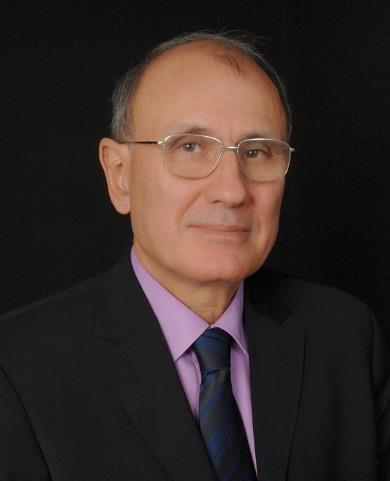
The US National Academy of Engineering (NAE) announced on February 7, 2023 that Dr. Polat Gülkan at the Department of Civil Engineering at Başkent University, and Professor Emeritus at Middle East Technical University, Ankara, had been elected as a member.
Election to the National Academy of Engineering is among the highest professional distinctions accorded to an engineer. Academy membership honors those who have made outstanding contributions to "engineering research, practice, or education, including, where appropriate, significant contributions to the engineering literature" and to "the pioneering of new and developing fields of technology, making major advancements in traditional fields of engineering, or developing/implementing innovative approaches to engineering education."
Individuals in the newly elected class will be formally inducted during the NAE's annual meeting on Oct. 1, 2023. A list of the new members and international members is given at nae.edu, with their primary affiliations at the time of election and a brief statement of their principal engineering accomplishments. The citation for Dr. Gülkan states that his professional performance “for improving earthquake safety of buildings and seismic resilience worldwide” has earned him this distinction.
This year's election brings membership to the academy to 2,388 members in the United States and 310 foreign associates.
The IAEE is pleased to include Dr. Gülkan on the list of IAEE presidents who have been elected to the US National Academy of Engineering.
2000 Luis Esteva
2015 Masayoshi Nakashima
2021 Sudhir Jain
2022 Farzad Naeim
2023 Polat Gülkan
Congratulations!
- IAEE Central Office
On 6 February 2023, a Mw 7.8 earthquake struck southern and central Turkey, and northern and western Syria. The epicenter was 37 km (23 mi) west–northwest of Gaziantep. A Mw 7.7 earthquake, centered 95 km (59 mi) north-northeast from the first, followed on the same day. The number of collapsed and heavily damaged buildings in 11 provinces in the earthquake zone in Turkey reached 230 thousand. The disaster caused a lot of fatalities and injuries and widespread damage to buildings, infrastructure, and historic monuments in Turkey and Syria. The IAEE offers our deepest condolences and sympathy to those affected by the devastating earthquake.
- IAEE Central Office
Colleagues, Affiliate Members and Friends of IAEE,
On September 14, 2022, I assumed the position of the sixteenth President of the International Association for Earthquake Engineering (IAEE) from Professor Masayoshi Nakashima. Under the leadership of Professor Nakashima, IAEE made very significant achievements including establishment of the CSI/IAEE Masters Series consisting of publication of monographs written by legendary figures in earthquake engineering, two of which have already been published and distributed at the 17th World Conference on Earthquake Engineering (17WCEE), and meetings with and greeting masters during the world conferences.
The 17WCEE was postponed because of Covid-19 pandemic and was conducted in a hybrid form at Tokyo, Japan with great success in 2021. Now we are looking forward to a great 18th World Conference (18WCEE) in Milan, Italy in 2024 and we look forward to a record participation in it by earthquake engineering professionals from all over the world. Four more CSI/IAEE Read the Masters monographs are in preparation and will be distributed at 18WCEE with corresponding Meet the Masters and Greet the Masters events.
I want to sincerely thank all officers, directors, and staff of IAEE and all 60 national delegates representing their nations and people at IAEE. During its 60 years of existence, IAEE has made a significant positive impact on the state of earthquake engineering worldwide and has brought together the knowledge, talent, and expertise of earthquake engineers worldwide to enable all of us to reduce to the extent that we all can, the disastrous effects of earthquakes worldwide on life and well-being of our fellow human beings. With your help and active participation, we will continue that path and make even more significant contributions to reduction of seismic risk worldwide. I am honored to have been elected to this prestigious position, and I look forward to working with all of you to move IAEE forward along its glorious path.
- Farzad Naeim, President
The website for the 18th World Conference on Earthquake Engineering is now open. Please click the banner and visit the official website for more information.
The subscription of the news can be applied from https://www.wcee2024.it/download-area/
Please feel free to share the circular with your colleagues.
- IAEE central office
The electric copies of papers presented in the 17th World Conference on Earthquake Engineering in Sendai, Japan are posted online (https://www.nicee.org/wcee/). The WCEE provided a unique opportunity to establish synergies between participants from different engineering areas and from such varied fields as earth sciences, economics and social sciences, and contributed to a global effort of the scientific and technical community towards a safer world in what regards the earthquake risk.
Special thanks go to a digital archiving project of the WCEE proceedings.
A fellowship fund has been established in the name of Joseph Penzien to fund and support graduate engineering students enrolled in the Department of Civil and Environmental Engineering at the University of California, Berkeley. Preference will be given to students who have demonstrated financial need and have chosen the field of structural engineering and structural mechanics. The goal is to raise $500,000 to qualify for a named graduate fellowship. [more]
|
|||
